OEM Vehicle Floor Carpets: Material & Geometry Engineering
Vehicle Floor Carpets in OEM Projects: Why Material and Geometry Matter
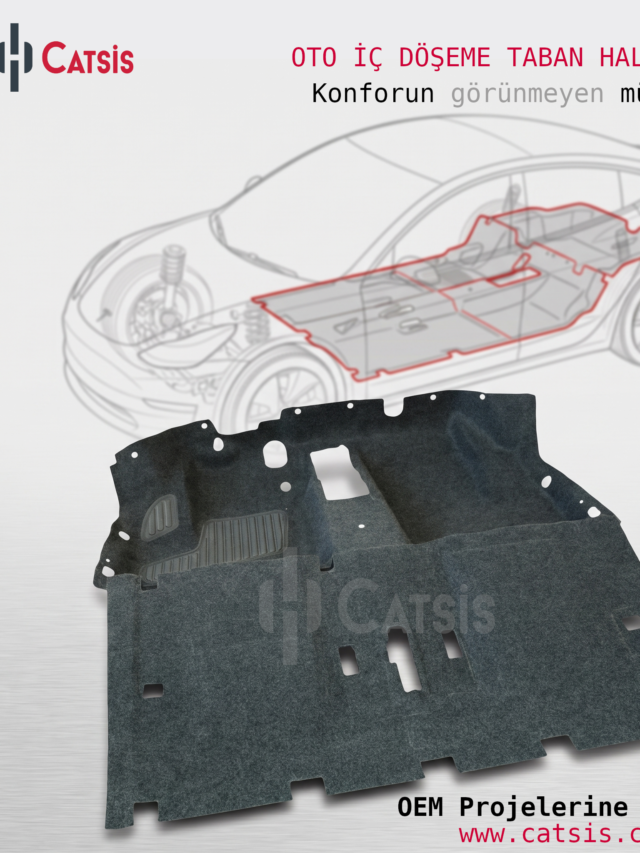
In the automotive industry, interior cabin acoustic comfort is one of the most critical parameters determining overall vehicle quality. The cabin floor represents a vast surface area directly exposed to tire rotation noise, underbody aerodynamic wind, and exhaust or chassis vibrations. Within this expansive area, the automotive floor carpet serves as the primary component responsible for providing both acoustic insulation and visual aesthetic cohesion.
In an OEM project, selecting a floor carpet system is far more than a decorative trim decision; it is directly tied to achieving NVH (Noise, Vibration, and Harshness) targets, managing total vehicle mass, and ensuring assembly efficiency on the production line. This article explores why material composition and geometric form serve as essential engineering criteria when developing floor carpets to OEM standards.
Acoustic Performance in Floor Carpets: Balancing Insulation and Absorption
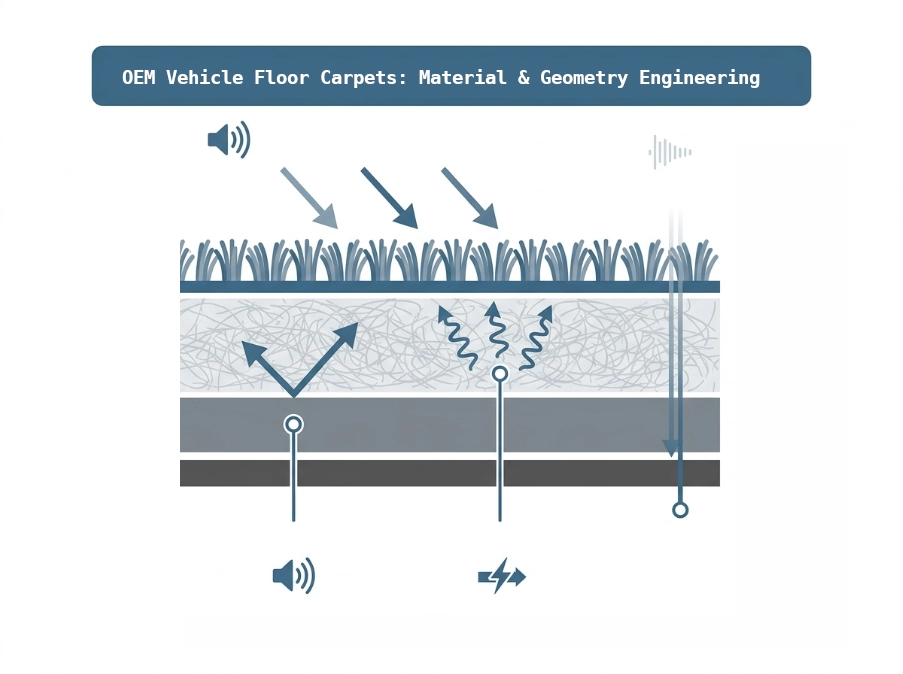
The floor carpet acts as a primary acoustic barrier between the vehicle’s underbody sheet metal and the interior cabin. Achieving optimal acoustic performance requires managing two distinct physical mechanisms simultaneously:
-
Sound Insulation (Barrier Effect): High-density, high-mass layers are utilized to block high-energy airborne noise originating beneath the floor pan.
-
Sound Absorption: Porous and fibrous structures are employed to absorb reverberating sound waves within the cabin, reducing overall sound pressure levels.
[INTERNAL LINK SUGGESTION: NVH Management and Acoustic Materials in Automotive Engineering]
The balanced execution of these two mechanisms depends heavily on the multi-layered material architecture of the carpet assembly.
The Engineering Dimensions of Material Selection
Floor carpets engineered for OEM applications are not single-piece textiles; they are complex, multi-layered sandwich composites. Key layers and their functional roles include:
1. Face Layer (Tufted or Nonwoven Carpet)
Designed to withstand wear, dirt, and mechanical abrasion, this exposed layer provides visual aesthetics while its porous fiber structure helps absorb high-frequency interior noise.
2. Heavy Barrier Layer (Heavy Layer / Bitumen or EPDM)
This dense, high-mass layer increases Transmission Loss (TL) across the floor pan. It plays a primary role in dampening airborne acoustic energy penetrating through the steel body panels.
3. Acoustic Sub-Layer (Formable Acoustic Felt / Nonwoven)
Positioned directly against the steel floor pan, this lightweight, fibrous felt layer facilitates flush fitment while absorbing lower-frequency sound waves and damping structural panel vibrations.
[EXTERNAL RESOURCE: ISO 3795 Standard – Determination of Burning Behaviour of Interior Materials in Road Vehicles]
+-------------------------------------------------------------------+
| LAYER                 | PRIMARY FUNCTION                          |
+-------------------------------------------------------------------+
| Face Textile Layer    | Abrasion Resistance & High-Frequency Absorption |
| Heavy Barrier Layer   | Sound Transmission Loss (Barrier Effect)  |
| Acoustic Sub-Felt     | Low-Frequency Damping & Chassis Fitment   |
+-------------------------------------------------------------------+
 The Importance of Geometry and Thermoforming
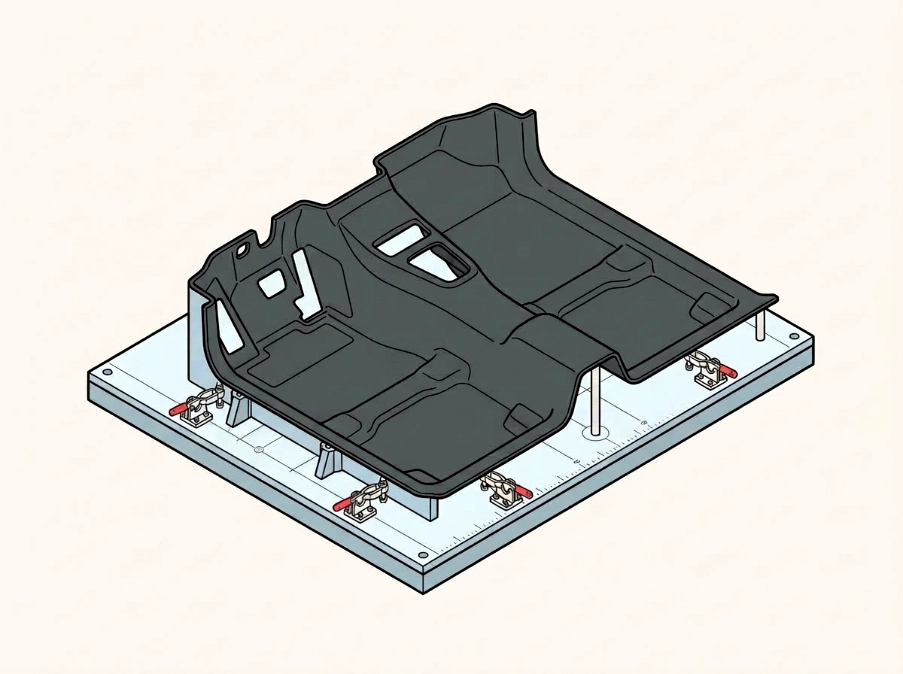
Even if the ideal materials are selected, acoustic performance degrades significantly if the carpet’s 3D geometry fails to match the vehicle’s structural floor pan precisely. In OEM projects, precise geometry achieved through thermoforming (heat molding) is critical for several reasons:


Preventing Acoustic Leaks
Any air gap remaining between the sheet metal and the carpet assembly creates an acoustic bridge, allowing unmitigated sound to leak into the cabin. Precise 3D thermoforming ensures flush contact along all chassis contours, eliminating these leaks.
Assembly Line Efficiency
Every second counts on an OEM assembly line. A carpet with exact 3D geometry and structural rigidity allows line operators to position the part seamlessly without manual stretching or forced fitment.
Integration with Interior Trim and Components
Center consoles, seat mounting brackets, and pedal assemblies are installed directly over or through the floor carpet. Geometric tolerance deviations can cause trim misalignments, gap inconsistencies, and unwanted Squeak & Rattle (S&R) noise during vehicle operation.
Key Considerations in OEM Floor Carpet Design
-
Total Mass Optimization: To reduce overall vehicle weight while maintaining NVH targets, engineers utilize variable-thickness felts and optimized acoustic barrier configurations.
-
Flame Retardancy: Materials must comply strictly with interior safety standards (e.g., FMVSS 302 or ISO 3795).
-
Odors and VOC Emissions: To maintain healthy interior air quality, raw materials must satisfy stringent low-VOC (Volatile Organic Compounds) and low-odor OEM specifications.
-
Recyclability: In alignment with corporate sustainability goals, mono-material carpet systems (such as 100% Polyester/PET assemblies) are increasingly preferred.
Conclusion
In OEM vehicle development, the floor carpet is not merely a cosmetic floor covering—it is a functional component that directly governs NVH performance, overall weight management, and manufacturing efficiency. When the acoustic characteristics of engineered material layers are combined with precise 3D thermoformed geometry, the result is both a quiet driving experience and a streamlined OEM assembly process.
FAQ
Q1: Do heavy barrier layers and acoustic felts in floor carpets significantly increase vehicle weight? Answer: Traditional bitumen-heavy barriers can add weight; however, modern OEM projects utilize lightweight EPDM blends and high-performance acrylic/PET nonwoven felts to achieve an optimal balance between low weight and high acoustic transmission loss.
Q2: What problems arise from geometric dimensional deviations in a floor carpet? Answer: Dimensional deviations create air pockets between the steel floor pan and the carpet, leading to acoustic leaks into the cabin. Furthermore, improper fitment around center consoles and seat mounts causes trim misalignment and Squeak & Rattle (S&R) issues during driving.
Q3: How do automotive floor carpet assemblies meet VOC and odor standards? Answer: OEM standards are met by using low-emission hotmelt adhesives, raw fiber materials certified for low volatile organic compound (VOC) release, and tightly controlled thermal processing during the molding stage.